
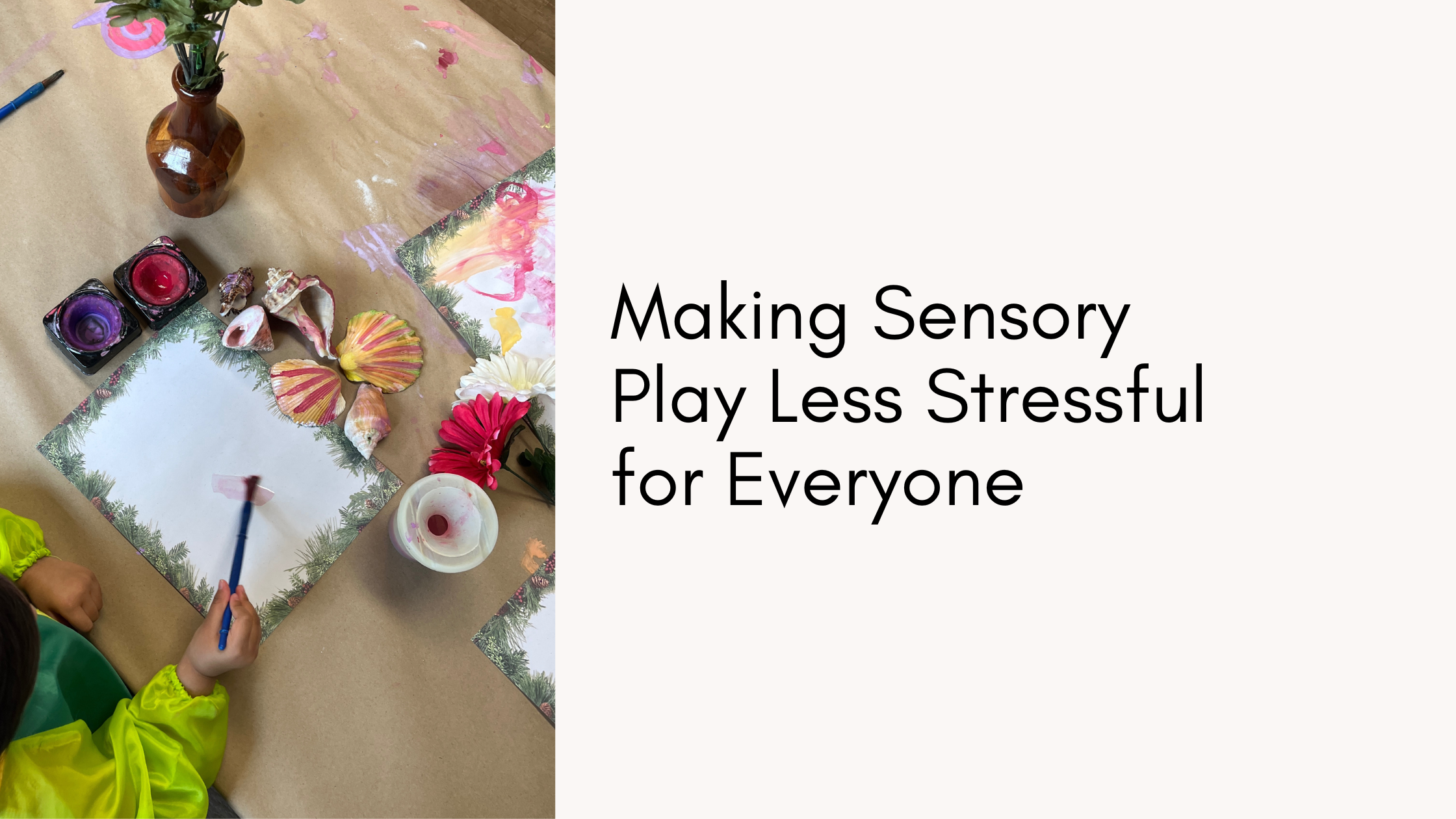
Sensory play is one of the best ways to offer everyone a chance to reset without having to rely on any screen time. I try to make sure that my two year old gets at least one opportunity in the day to engage in this type of play.
It gives her an opportunity to regulate her emotions and it’s a chance for me to be able to drink my afternoon tea in a mostly quiet room.
As someone who has anxiety about mess, sensory play was naturally one of those things that I really limited exposure to for my toddler until she was a bit older. But she surprised me with how well she was able to understand and follow the boundaries that were set for her.
Here are 5 tips that have helped us make it a joyful experience:
- It’s important to consider your threshold and what level of mess you are personally able to handle. Rice for sensory play isn’t for me because I can’t be bothered to pick up little pieces of rice. Water play I can handle. Play doh, yes. Are you better with a sensory mess that can be cleaned with a broom or do you prefer something that stays on the table and can be wiped away?
- Find ways to contain it. This can look like setting up a play mat under where the sensory play will take place. This makes cleaning up easier and reduces your anxiety about possibly damaging any of your furniture or floors, etc.
- Clearly communicate the boundaries. My toddler knows that playing with play doh happens only at her table. She cannot be working with it on other surfaces. Demonstrating how to play can also be helpful. Show them the water doesn’t get dumped out of the sink, it is supposed to stay in.
- End on a good note whenever possible, even if things aren’t going great. If your kid is having a tough time following the boundaries, or the mess is getting out of hand, redirecting to another activity is helpful. It also helps you learn how you can modify the activity for the next time to make it more manageable for everyone.
- Lastly, it can be helpful to clean up together. This is the perfect opportunity to teach them and add in connection time. Eventually, this leads to them knowing clean up follows play and they might even take the lead instead of leaving it for you to clean up all the time.

Sensory play encourages learning through exploration, curiosity, problem solving and creativity. It helps to build nerve connections in the brain and encourages the development of language and motor skills.
There are also others benefits that go unnoticed, such as the development of abilities to focus and block out distractions.
I really believe that it’s SO worth it to offer these sensory opportunities for your kids, especially now with warmer weather when you can take all the mess outdoors.
What sensory play opportunity will you build into your day?
PS. If you’re looking for play ideas for your kids over 2, check out Inspiring Play which includes 30 open ended play prompts to help your child learn to play independently without setting up a new activity every day.
Leave a Reply