
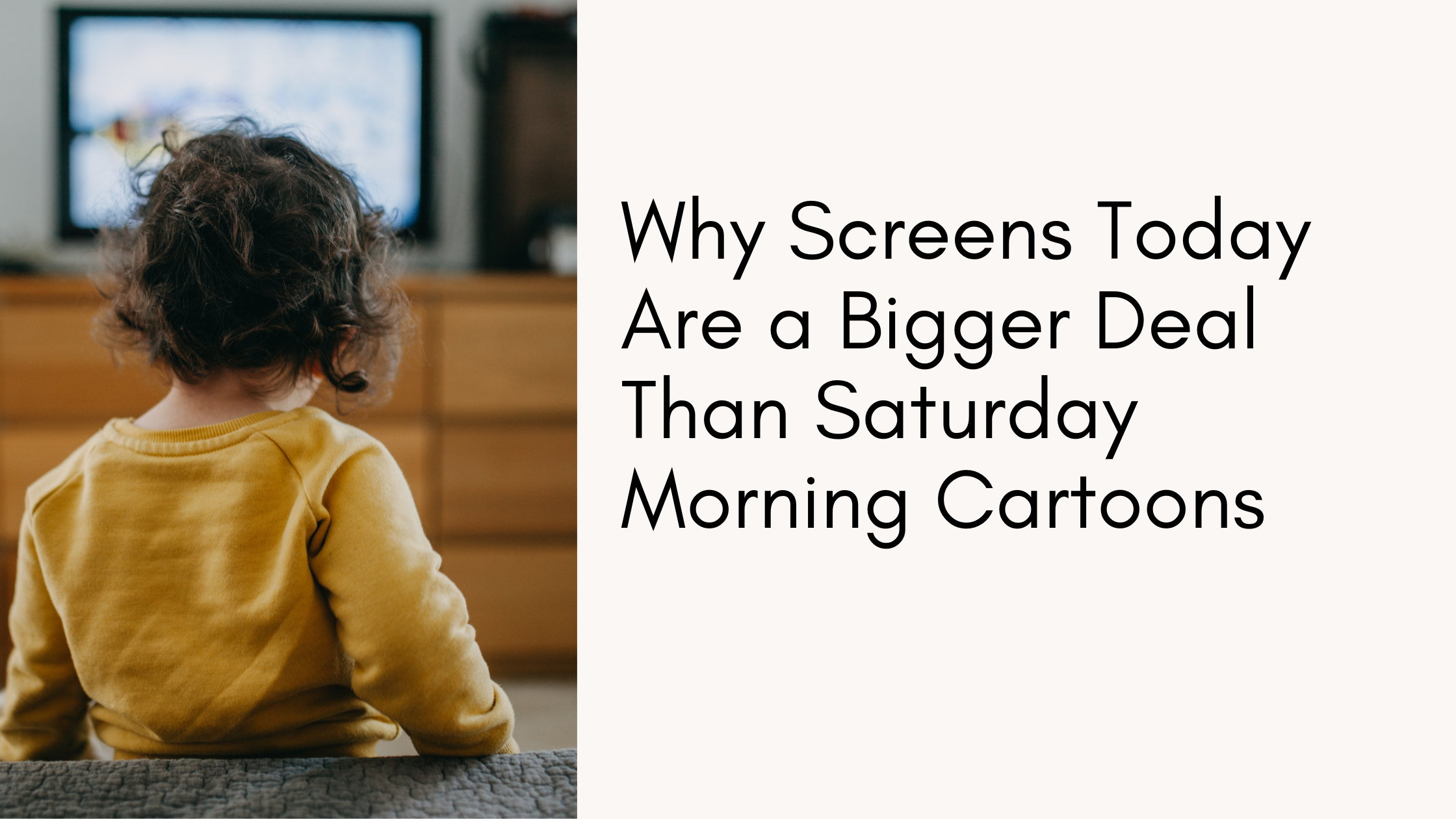
Ah, the classic parenting debate: “What’s the big deal about screens? We grew up watching TV and turned out fine.” It’s an argument many parents and grandparents make, often accompanied by a nostalgic story about Saturday morning cartoons or a favorite sitcom. On the surface, it seems like a fair point. But when you take a closer look, things today aren’t quite the same as they used to be.
TV in the Past vs. Modern Screens: What’s Changed?
Let’s rewind to the good old days of TV. Back then, shows aired at specific times. If you missed your favorite cartoon, you’d have to wait until next week—or hope for a rerun. Watching TV was often a shared family activity, and screen time was naturally limited by the availability of programming and the patience of parents.

Fast forward to today, and screens are everywhere. Kids can binge-watch endless shows on demand, scroll through YouTube for hours, or get immersed in games designed to keep them engaged as long as possible. It’s not just more screen time; it’s more intense and personalized screen time. This shift changes the way screens impact children’s lives.
The Problem With the “We Turned Out Fine” Argument
Sure, most of us who grew up watching TV survived without major issues. But here’s the reality: screens weren’t a constant presence in our lives back then. Outside of TV time, we spent hours riding bikes, building forts, or just figuring out how to entertain ourselves. Boredom often led to creativity.
In contrast, today’s screens are portable, endless, and highly engaging. They can easily dominate playtime, mealtime, and even bedtime. It’s not just about how much kids are watching; it’s about what they’re missing out on while glued to a screen. Outdoor play, social interactions, and imaginative activities often take a backseat.

How Screens Affect Kids’ Brain Development and Social Skills
Excessive screen time can have significant effects on young children’s development. Studies have linked too much screen use to:
- Shorter Attention Spans: Overstimulation from fast-paced media can make it harder for kids to focus on slower-paced, real-world tasks.
- Reduced Creativity: Time spent passively consuming content replaces opportunities for imaginative play and problem-solving.
- Sleep Issues: Blue light from screens can interfere with sleep cycles, making it harder for kids to wind down.
- Social Skill Deficits: Kids learn essential social skills by playing with others and interacting with adults. A tablet or smartphone can’t replicate those experiences.
According to a 2019 study published in JAMA Pediatrics, children aged 2 to 5 who spent more than two hours a day on screens scored lower on tests measuring developmental milestones like language and motor skills. While screens aren’t inherently harmful, the amount and type of screen time matter.
Tips for Creating Healthy Screen Time Habits
Instead of banning screens altogether, focus on creating boundaries that encourage a balanced approach. Here are a few tips:
- Limit Screen Time: Set daily screen time limits based on your child’s age. For example, the American Academy of Pediatrics recommends no more than one hour per day of high-quality programming for kids aged 2 to 5.
- Designate Screen-Free Zones: Keep screens out of bedrooms and off the table during meals to encourage better sleep and more family connection.
- Encourage Non-Digital Activities: Offer plenty of opportunities for outdoor play, creative projects, and hands-on activities.
- Co-View When Possible: Watching screens together can help you stay involved in what your child is consuming and open up opportunities for conversation.
- Model Healthy Habits: Kids mimic what they see. If you want them to use screens intentionally, show them how by setting your own boundaries.
Final Thoughts
The “we grew up watching TV and turned out fine” argument might sound comforting, but it’s an oversimplification. Screens today are a whole different animal, and their design makes it easier than ever for them to take over. As parents, our goal isn’t just for our kids to “turn out fine”—we want them to thrive.
Helping kids build healthy screen habits ensures they have plenty of room for what really matters: outdoor adventures, family connections, and creative play. Screens are a bigger deal than they used to be, but with intentional boundaries, we can keep them from becoming too big of a deal.
How do you balance screen time in your home? Share your tips or challenges in the comments below!

Latest Posts
- Free and Fun Printable Playdough Mats For Kids
- The Best Way to Organize Kids Clothes + Free Visual Labels
- Best Screen Free Activities to Try Instead of Screen Time for Toddlers
- Free Summer Activity Printables for Preschoolers
- A Simple Screen Free Activities Schedule for Toddlers
Leave a Reply