
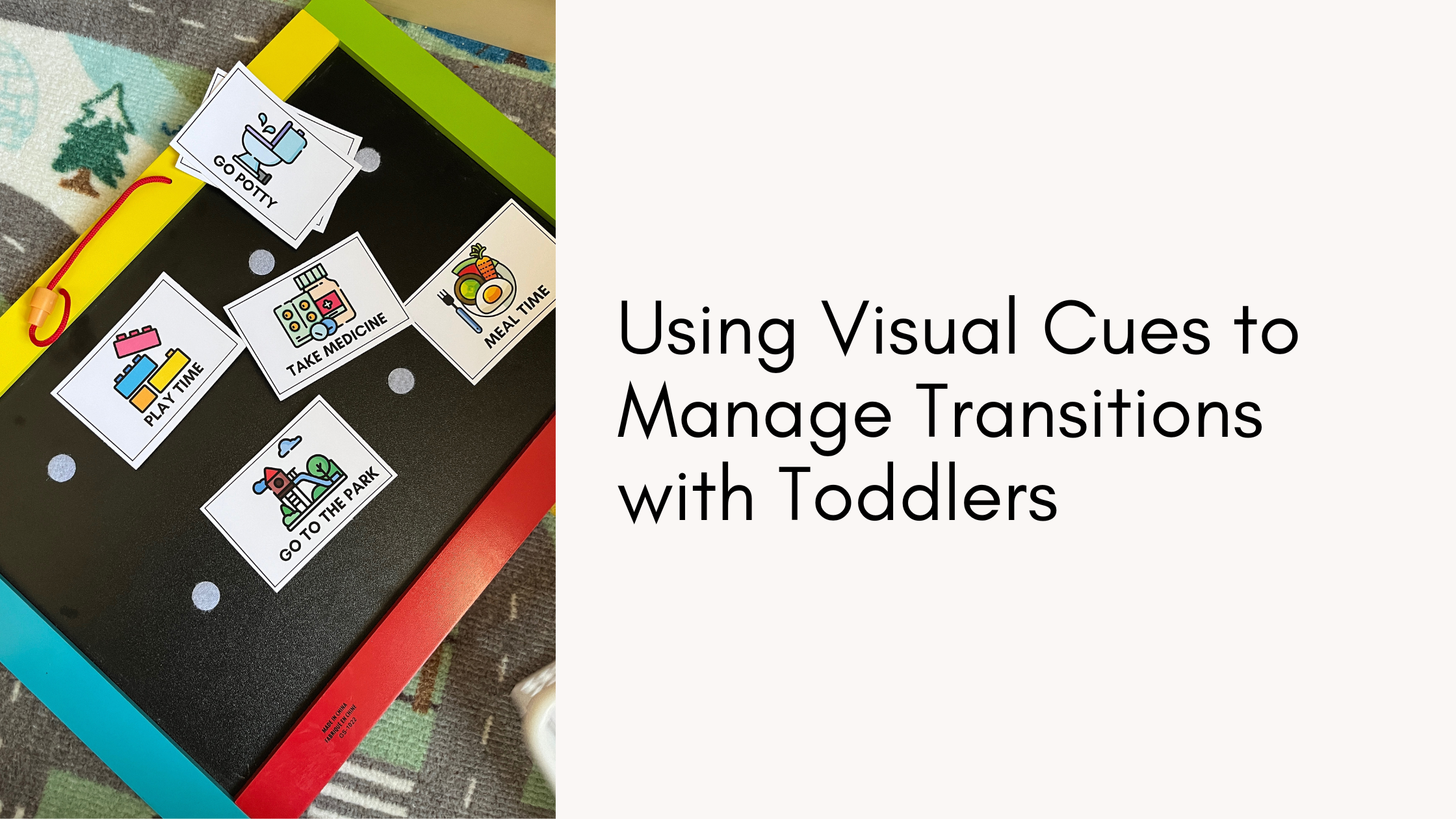
Does it ever feel like getting out of the house or doing the bedtime routine is a STRUGGLE with your toddler? Well, you’re not alone and using visual aids like a visual timer and visual cards can help a ton with reducing power struggles and making transitions easier!

Note: This post contains affiliate links. If you click and make a purchase, I may earn a small commission at no extra cost to you.
When should I use a visual timer with my toddler/kids?
Toddlers don’t understand when you say “just 5 more minutes” so here’s what you can do to help: use a visual timer!
Visual timers can be helpful in various situations with toddlers — here are a few examples of when they can be used:
✨ Transitioning Between Activities: Use a visual timer to signal when it’s time to move from one activity to another, such as playtime to mealtime or bath time to bedtime.
✨ Task Completion: Set a timer to help your toddler understand how long they have to complete a task, like cleaning up toys or getting dressed.
✨ Turn-Taking: Use a timer to indicate how long each child gets to play with a toy or take a turn in a game, promoting fairness and patience.
✨ Limiting Screen Time: Set a timer to establish boundaries for screen time, indicating when it’s time to turn off devices.
✨ Encouraging Independence: Use a timer to help toddlers learn to do tasks independently, such as brushing teeth or getting ready for bed, by giving them a set amount of time to complete the task.
✨ Waiting: Use a timer to help toddlers understand how long they need to wait for something, such as waiting for a snack to cool down or waiting for a parent to finish a task.
How should I use a visual timer with my toddler?
Here are some tips to help you use a visual timer effectively so it can become an effective tool in your parenting toolkit.
Choose the Right Timer
Pick a timer that is easy for toddlers to understand. Some timers have a visual countdown (like a color changing from green to red) that can make the concept of time more tangible.

Explain the Purpose
Before using the timer, explain to your toddler what it is and how it works. You might say, “This timer helps us know when it’s time to clean up!”
Set Clear Time Limits
Use the timer to set clear, simple time limits for activities, like building independent play skills, screen time or how long they have until you leave the house to go somewhere. For example, you can set it for 5 or 10 minutes.
Make It Routine
Incorporate the timer into daily routines so your toddler knows when to expect it. This helps them understand that it’s a normal part of activities. Use the timer regularly for similar activities to build familiarity and understanding. It’s important not to overuse it and incorporate it only in places where you feel it’s most needed.
Pair with Visual Cards
Pair the timer with visual cards or charts that indicate what comes next after the timer goes off, such as “After playtime, it’s time for a snack.” You can leverage these to show what your child will be doing now, and next. The timer can help with how long they’ll be doing something!

Adjust As Needed
If a time limit seems too long or short, adjust it based on your toddler’s response. They may need more time for certain activities or shorter limits to maintain engagement.
Your Action Plan for Smoother Transitions with Your Toddler
Using VISUAL CARDS with a toddler can be a fun and effective way to help them understand and follow daily routines or rhythms in your home. Here’s how you can incorporate it in your home:
💡 Show the chart to your toddler and explain how it works. For example, you can say, “First, we brush our teeth. Then, we put on pajamas. Finally, we read a story.”
💡 It’s also important to use the chart consistently. Help your toddler match the steps with the visuals as you go along.
A VISUAL TIMER is a fantastic tool for helping toddlers understand the concept of time and manage transitions more smoothly.
💡 When starting to use it first, use it for a short activity first, so your toddler can see how it works in real time.
💡 Instead of using the timer for everything, use it for specific activities. For example, set it for 5 minutes for how long they have before you leave the house. Or if brushing the teeth is a struggle, use it then!
By using a visual timer and visual cards/charts thoughtfully, you can help your toddler grasp the concept of time while making transitions more manageable and fun!
What age did you introduce yoto to your child
ive got 2.5 year old who just doesnt gain weight. a hv told me to try the screen while he…
What a lovely post and so inspiring. For someone is who really struggling in my corporate job – feel disconnected,…
These are all such wonderful and important things for littles to know! You’ve just saved an uncreative mom.
[…] For my full list of stories and podcasts by age, check out THIS blog post. […]


Leave a Reply